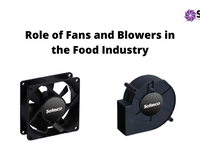

Cooling fans and blowers play a critical role in maintaining safe operating temperatures across HVAC systems, industrial machinery, and electronic enclosures. At the heart of these systems are electric motors that determine airflow performance, pressure capability, noise levels, and long-term reliability. Understanding the types of electric motors used in cooling fans and blowers helps engineers, OEMs, and procurement professionals select the right solution for optimal performance. From compact axial fans used in control panels to high-pressure centrifugal blowers designed for HVAC systems, proper motor selection directly impacts efficiency and durability. This post explains the most common motor technologies used in cooling fans and blower units and outlines how to choose the right motor for specific cooling requirements.
Why Electric Motor Selection Matters in Cooling Fans
- Airflow and Pressure Capability: Motor design directly controls the volume of air moved and the static pressure the fan can overcome, determining whether your system meets cooling requirements.
- Energy Efficiency: Different motor types operate at different efficiency levels, ranging from around 30–40% for shaded pole motors to over 80–90% for brushless DC designs, directly impacting operational costs.
- Acoustic Performance: Motor construction influences noise levels through electromagnetic design, bearing selection, and commutation methods, critical for occupied spaces and noise-sensitive environments.
- Thermal Management: The motor's ability to dissipate heat affects both its own longevity and the overall cooling system's capacity, particularly important in high-temperature applications.
- Service Life and Reliability: Proper motor matching to load conditions significantly extends equipment lifespan and reduces maintenance requirements.
Common Types of Electric Motors Used in Cooling Fans:
Cooling fans can operate using either AC or DC motors, depending on the application. AC motors are commonly used in industrial ventilation systems and equipment cooling, where direct connection to the power grid is required.
DC motors are typically used in electronics cooling and compact fan systems because they offer better speed control, lower noise, and higher efficiency. Choosing between AC and DC motors depends on factors such as power supply availability, airflow requirements, and control flexibility.
Shaded-Pole Motor
The shaded-pole motor is one of the simplest and most cost-effective motor designs. It operates using a copper shading ring that creates a delayed magnetic field, generating a weak rotating field to start the motor. Owing to its simple construction, it has no start capacitor or centrifugal switch. The primary benefits of shaded pole motors are low cost, compact size, and minimal maintenance. However, they provide low starting torque and moderate efficiency compared to other motor types. These motors are ideal for small AC axial cooling fans used in light-duty cooling applications such as small appliances, electronics cooling, and low-resistance airflow environments.
Brushless DC Motor (BLDC)
Brushless DC (BLDC) motors are widely used in modern cooling fans due to their high efficiency, precise speed control, and long service life. Unlike traditional motors that rely on brushes, BLDC motors use electronic commutation, which reduces friction and wear. These motors are commonly used in electronics cooling, server systems, and high-efficiency ventilation equipment. BLDC fan motors also support variable speed control, allowing cooling systems to adjust airflow based on temperature or system demand.
Electronically Commutated (EC) Motor
Electronically commutated (EC) motors combine the advantages of AC power input with the efficiency of brushless DC motor technology. These motors include an integrated electronic controller that converts AC power to DC and regulates motor operation. EC motors are widely used in energy-efficient HVAC systems and advanced ventilation applications. They offer improved efficiency, quieter operation, and better speed control compared to conventional AC motors.
Permanent Split Capacitor (PSC) Motor
A PSC motor uses a run capacitor to create a stronger rotating magnetic field. Resulting in higher starting torque and improved efficiency. Unlike shaded-pole motors, capacitor motors can handle heavier loads and higher airflow resistance. Permanent split capacitor motors are commonly used in HVAC systems, air handling units, and industrial centrifugal blowers where consistent performance and reliability are essential.
How to Choose the Right Motor for Cooling Fans and Blowers
Selecting the optimal motor type requires careful analysis of application requirements, operating environment, and total cost of ownership. Here's how to select the right motor for cooling fans and blowers:
- Airflow vs Pressure Requirements: Start by determining whether your application prioritizes high airflow or high pressure. Axial systems typically require airflow-focused motors, while blowers need torque-driven motors capable of overcoming static pressure. Matching motor characteristics to airflow resistance ensures optimal efficiency and performance.
- Duty Cycle: Is the motor running continuously or intermittently? Continuous-duty environments require higher-efficiency motors with superior thermal protection. For 24/7 operations, investing in a robust motor design reduces downtime and maintenance costs.
- Noise and Efficiency: Energy-efficient motors not only reduce operational costs but also generate less heat and noise. In environments like offices, medical facilities, or electronics enclosures, low-noise motor fans improve overall system performance and comfort.
- Environmental Conditions: Dust, humidity, temperature extremes, and corrosive atmospheres all impact motor lifespan. Selecting motors with proper insulation, sealed bearings, and protective enclosures ensures durability in harsh conditions.
- Bearing Type and Motor Lifespan: The bearing type used in a fan motor also affects reliability and noise levels. Sleeve bearings are commonly used in smaller fans because they are cost-effective and compact. Ball bearings provide greater durability and are better suited for continuous operation or higher-temperature environments.
AC vs DC Fan Motors
AC motors are commonly used in industrial ventilation systems and HVAC equipment where direct connection to utility power is required. These motors are simple, reliable, and cost-effective for continuous operation.
DC fan motors, particularly brushless DC motors, are widely used in electronics cooling and precision airflow applications. They offer higher efficiency, lower noise levels, and precise speed control through electronic regulation.
How to Fix an Electric Fan Motor
Fixing an electric fan motor starts with isolating whether the failure is electrical, mechanical, or controller-related. Begin with a visual and electrical inspection, then move to component-level checks before deciding on repair or replacement.
- Check power supply & wiring: Verify voltage stability, loose connections, or burnt terminals; these are common causes of motor failure in industrial cooling systems.
- Inspect capacitor (AC motors): In PSC and shaded-pole motors, a faulty run capacitor often leads to startup failure, or low torque replacement is a quick, cost-effective fix.
- Evaluate mechanical condition: If the motor hums but doesn’t rotate, inspect for bearing wear, shaft misalignment, or rotor seizure; lubrication or bearing replacement may restore operation.
- Test controller (DC/BLDC fans): For BLDC and EC motors, check the internal driver circuit and commutation system, as electronic failure can prevent proper rotation.
- Decide repair vs upgrade: Repeated overheating, noise, or airflow loss indicates it’s more efficient to switch to a high-efficiency replacement fan motor like EC or BLDC cooling fans, which offer better performance, energy savings, and long-term reliability for OEM applications.
This approach ensures faster diagnostics, reduced downtime, and optimal thermal management in demanding cooling environments.
How Sofasco Engineers Select Motors for Cooling Fans
Engineers at Sofasco International evaluate several critical factors when selecting motors for cooling fans and blowers, including airflow requirements, operating environment, available power sources, and expected duty cycles.
- AC shaded-pole motors are often selected for compact axial fans used in control panels and electronic enclosures.
- Permanent split capacitor (PSC) motors are commonly used in larger industrial fans and centrifugal blowers that require higher starting torque and stable airflow performance.
- Brushless DC (BLDC) motors are preferred for high-efficiency electronic cooling applications where precise speed control, low noise, and long service life are critical.
By carefully matching motor design to fan performance requirements, Sofasco ensures reliable airflow, quiet operation, and long-term durability in demanding environments.
Sofasco offers a wide range of AC and DC cooling fans, including axial fans, cross-flow fans, and blowers designed for electronics cooling, telecommunications equipment, and industrial applications.
FAQs
1. Which motor is used in cooling fans?
Cooling fans commonly use shaded pole motors, permanent split capacitor (PSC) motors, or DC motors, depending on airflow and efficiency requirements. Small axial fans often use shaded pole motors, while larger systems may require capacitor motors.
2. Which motor is used in an air blower?
Air blowers typically use capacitor motors because they provide higher starting torque and can handle the pressure demands of centrifugal systems.
3. What type of motor is commonly used in HVAC blower fans?
HVAC blower fans commonly use capacitor motors for their efficiency, reliability, and ability to deliver sufficient torque for ducted airflow systems.
4. Which motor is best for axial fans?
The best motor for axial fans depends on the application. For small, low-pressure systems, shaded-pole motors are sufficient. For higher efficiency and variable speed control, DC or capacitor-based motors are often preferred.
5. What is the difference between shaded-pole and capacitor motors?
- Shaded-pole motors use a copper shading coil to create a weak rotating magnetic field that starts the motor. They are simple, compact, and inexpensive but offer lower efficiency and starting torque.
- Capacitor motors, such as permanent split capacitor (PSC) motors, use a run capacitor to create a stronger rotating magnetic field. This improves starting torque, efficiency, and overall performance, making them suitable for larger fans, HVAC systems, and blowers that require higher airflow or pressure capability.