
In today's high-performance electronics landscape, thermal management has become one of the most critical challenges engineers face. As circuit boards become denser and components generate more heat, the question of how to effectively manage temperatures has shifted from "should we cool our PCBs?" to "what's the best cooling strategy?" The answer, for most modern applications, is neither passive cooling alone nor active cooling alone but rather an intelligently designed hybrid cooling system that leverages the strengths of both approaches.
Understanding the Basics: Passive vs. Active Cooling
Before exploring how these two strategies complement each other, it's essential to understand what each brings to the table.
Passive cooling
Relies on natural heat dissipation through conduction, convection, and radiation without any moving parts or external power input. Heat sinks, thermal vias, careful PCB layout, and strategic component placement are the primary tools engineers use in passive cooling strategies. This approach is silent, requires no maintenance, consumes no additional power, and offers excellent reliability since there are no moving components to fail. However, passive cooling has inherent limitations; it can only dissipate a finite amount of heat based on the temperature differential between the components and the surrounding environment.
Active cooling,
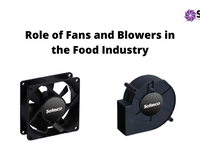
By contrast, employs mechanical assistance through fans and blowers to forcibly move air across heat-generating components. By creating airflow, active cooling systems can dramatically increase the rate of heat transfer. Industrial axial fans, cross-flow fans, and specialised chip coolers can be precisely controlled, scaled, and customised to meet specific thermal requirements. Active cooling systems are particularly valuable in confined spaces, high-performance computing environments, and applications where passive methods simply cannot handle the thermal load.
The Hybrid Cooling Approach: Strength in Synergy
The most effective thermal management strategy for modern PCBs integrates both passive and active cooling into a unified hybrid cooling system. This approach allows engineers to optimise performance, reliability, and efficiency across diverse operating conditions.
Why Hybrid Systems Are Essential
Modern PCBs are subjected to increasingly demanding thermal challenges. A datacenter server might operate at full capacity for extended periods, while an industrial control panel experiences variable loads. In both scenarios, a hybrid approach provides several critical advantages:
Efficiency: By combining passive cooling elements with strategically deployed active cooling, systems can operate more efficiently across their entire performance range. During normal operating conditions, passive cooling handles baseline thermal dissipation, reducing the need for continuous fan operation and minimising power consumption.
Reliability: Hybrid systems provide redundancy. If active cooling components require maintenance or experience unexpected issues, passive cooling elements continue to function, ensuring the device doesn't immediately overheat. This is particularly important in mission-critical applications where downtime is costly.
Scalability: As processing demands increase, hybrid systems can be scaled by enhancing passive elements first, then selectively adding active cooling capacity. This modular approach allows manufacturers to optimise costs while maintaining thermal performance.
Noise and Power Considerations: By allowing passive cooling to handle the baseline thermal load, active cooling components like industrial fans only need to operate at higher speeds when necessary, resulting in lower average noise levels and reduced energy consumption compared to continuous high-speed fan operation.
How These Systems Work Together in Practice
Consider a typical electronics enclosure housing multiple high-performance processors. The PCB thermal management strategy would involve several integrated layers:
Layer 1 - Foundation Passive Cooling:
Engineers start with fundamentals. Thermal vias distribute heat to the inner copper layers. Heat sinks with optimised surface areas are attached directly to high-power components. Component placement is carefully orchestrated to prevent thermal hotspots. Superior thermal materials and strategic use of thermal pads ensure efficient conduction pathways.
Layer 2 - Airflow Optimisation:
Cross-flow fans or specialised axial fans are integrated into the enclosure design to create directed airflow patterns. These industrial cooling fans aren't just randomly placed; they're positioned to channel air directly across passive cooling elements, significantly amplifying their effectiveness. When passive cooling reaches its limits, the active system activates.
Layer 3 - Intelligent Control:
Modern hybrid systems incorporate smart control algorithms. Temperature sensors strategically placed on the PCB trigger active cooling components only when necessary. This approach is passive until active is needed, maximises efficiency and extends component lifespan by avoiding unnecessary stress from continuous operation.
The Role of Industrial Grade Cooling Solutions
For critical applications, standard consumer-grade cooling solutions often fall short. This is where purpose-built industrial cooling solutions become invaluable. Manufacturers like Sofasco provide energy-efficient industrial fans specifically engineered for demanding thermal management applications. Their product portfolio, including ball bearing and sleeve AC/DC/EC axial fans, cross flow fans, blowers, and specialised chip coolers, addresses the specific demands of industrial PCB thermal management.
What distinguishes industrial-grade cooling solutions? Several factors: rugged construction designed for harsh operating environments, superior energy efficiency that translates to lower operating costs, compact designs that maximise airflow in space-constrained applications, and extremely low noise levels that matter in sensitive environments. Additionally, customised cooling solutions can be tailored to specific thermal requirements through prototyping, simulation, and thermal validation.
EC Fans: The Modern Advantage
Among available options, electronically commutated EC fans represent a significant advancement in active cooling technology. These fans use AC input with internal DC motors and intelligent controllers, offering exceptional performance characteristics. EC fans deliver up to 80% energy savings compared to traditional AC alternatives while providing self-monitoring and automatic protection features. For PCB thermal management in high-efficiency systems, EC axial fans and EC centrifugal fans represent the optimal balance of performance, efficiency, and reliability.
Passive vs. Active Cooling: Which Strategy Is Best for Modern PCBs?
The answer is unequivocally: hybrid systems combining both approaches. While passive cooling provides a silent, maintenance-free foundation, it cannot independently handle the thermal demands of modern high-performance electronics. Similarly, continuous operation of active cooling systems at maximum capacity wastes energy and generates unnecessary noise.
Progressive design philosophy recognises that different operating conditions demand different responses. During idle or low-load conditions, passive elements suffice. During peak performance periods, active cooling engages to maintain optimal operating temperatures. This dynamic approach maximises efficiency across the entire operational envelope.
Implementing Hybrid Cooling Systems: Best Practices
Successfully implementing hybrid cooling systems requires attention to several critical factors:
Thermal Analysis: Begin with detailed thermal modelling to understand heat generation patterns, identify potential hotspots, and determine where passive cooling can reliably function versus where active cooling becomes necessary.
Component Selection: Choose passive cooling components rated for your specific thermal requirements, appropriate heat sinks, thermal interface materials, and copper thickness. Select active cooling components, such as industrial-grade fans and blowers, that align with your thermal targets while considering power consumption, noise constraints, and operational environment.
System Integration: Design enclosure airflow patterns that maximise the effectiveness of active cooling components. Ensure passive cooling elements are positioned where airflow can enhance their performance.
Monitoring and Control: Implement temperature monitoring throughout the system. Use intelligent control algorithms that activate active cooling strategically rather than continuously, optimising overall system performance and lifespan.
Testing and Validation: Conduct comprehensive thermal testing under expected operating conditions. This validation confirms the hybrid system meets performance targets and identifies any optimisation opportunities.
Conclusion
Active and passive cooling are most effective when used together. Passive cooling provides a reliable, silent foundation for heat dissipation, while active cooling delivers the extra airflow needed during high-temperature or peak-load conditions. By combining both approaches into a hybrid cooling strategy and using industrial-grade fans where required, engineers can achieve optimal PCB temperature control, greater efficiency, lower noise, and long-term system reliability.
FAQs
1. What is active cooling and passive cooling in a laptop?
A. Active cooling uses components like fans or blowers to move air and dissipate heat, while passive cooling relies on heat sinks, vents, and natural airflow without moving parts.
2. Which is better, active or passive cooling?
A. Active cooling is better for high-performance or heat-intensive systems because it removes heat faster. Passive cooling is ideal for silent, low-power devices requiring minimal maintenance.
3. What are the advantages of passive cooling?
A. Passive cooling is silent, energy-efficient, low-maintenance, and highly reliable since it has no moving parts. It’s also cost-effective and suitable for compact or fanless devices.
4. What are the three types of cooling?
A. The three common cooling types are passive cooling, active cooling, and liquid cooling, each used based on the device’s heat output and performance needs.
5. How does passive cooling work on a PC?
A. Passive cooling uses heat sinks, thermal materials, and natural convection to move heat away from components without fans. Warm air rises and escapes through vents, allowing cooler air to replace it.