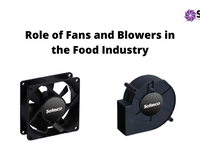

What Is a High Static Pressure Fan?
A high static pressure fan or blower is engineered to maintain adequate airflow against significant system resistance caused by ducts, filters, heat exchangers, and enclosed equipment housings. Unlike standard fans optimized for free-air flow, high static pressure fans use specialized impeller geometry and motor sizing to overcome airflow impedance in restrictive industrial environments. Resistance is measured in inches of water gauge (in. WG) or Pascals (Pa).
Industrial ventilation systems face a challenge open-air cooling never does: resistance. Every duct bend, filter bank, heat exchanger, and sealed enclosure fights back against airflow. Selecting the wrong fan means overheating, premature equipment failure, and costly operational downtime. This guide gives a definitive technical framework for selecting the right high static pressure fan or centrifugal blower for demanding industrial applications.
What Is Static Pressure in Industrial Ventilation and Why Does It Matter?
Static pressure is the resistance a fan must overcome to push air through a ventilation system. Measured in inches of water gauge (in. WG) or Pascals (Pa), it quantifies the total airflow impedance created by ducts, bends, filters, heat sinks, perforated baffles, and enclosure geometries. Higher static pressure ratings indicate the fan's ability to maintain airflow in restrictive environments.
In open bench environments, almost any fan moves sufficient air. In sealed industrial enclosures, control cabinets, telecom racks, or chemical processing units, resistance can be substantial. A fan performing well under free-air conditions may deliver only a fraction of its rated airflow when installed against real system backpressure, which is why correctly specifying static pressure fans is one of the most consequential decisions in industrial ventilation design.
Static Pressure vs. Airflow: How to Read a Fan Performance Curve
Every industrial fan is characterized by a P-Q (pressure-flow) curve that maps the relationship between static pressure and airflow (CFM or m³/h). Understanding this curve is essential to correct fan selection:
- At zero resistance - the fan delivers maximum free-air CFM.
- As system resistance increases - the operating point shifts along the curve, reducing airflow.
- At shut-off/stall pressure - airflow drops to zero. This is the maximum static pressure the fan can generate.
Common causes of high static pressure include dense filter media (HEPA/ULPA), long duct runs with multiple bends, heat exchanger fin arrays, perforated cable management panels, narrow plenum chambers, and high-IP-rated enclosure geometries that restrict inlet/outlet cross-section.
Selecting a fan based solely on rated free-air CFM without accounting for real duct resistance and airflow impedance is the single most common and costly fan specification mistake in OEM thermal design.
When Do Industrial Applications Require High Static Pressure Fans?
Not every ventilation task demands a high static pressure solution. The following industrial scenarios typically require fans or blowers rated for significant backpressure:
- Enclosed control panels and electrical cabinets: restricted inlet/outlet geometry creates significant back-pressure and ventilation system resistance.
- Duct-based ventilation systems: especially those with multiple bends, long runs, or narrow cross-sections, generate high duct resistance.
- Air-cooled heat exchangers and filtration units: dense filter media and closely packed fin arrays impose substantial pressure drop.
- Telecom and data equipment racks: high-density component layouts restrict airflow paths and increase airflow impedance.
- Oil and gas equipment enclosures: sealed IP54/IP65/IP66-rated housings significantly limit available airflow openings.
- Medical and laboratory equipment: HEPA and ULPA filtration systems impose very high resistance, requiring specialized static pressure fans.
- Food processing and chemical manufacturing: humidity, particulates, and specialized industrial ducting add compound system pressure drop.
Axial vs. Centrifugal Fan: Which High Static Pressure Fan Is Right for Your Application?
Choosing between axial fans and centrifugal blowers is the foundational decision in selecting industrial ventilation fans. Each topology offers distinct pressure-flow characteristics.
| Parameter | High Static Pressure Axial Fan | Centrifugal Blower |
|---|---|---|
| Airflow Direction | Parallel to shaft | Radial discharge (90°) |
| Static Pressure Capability | Low to moderate | High |
| Best Use Case | Panel cooling, filters, short ducts | Long ducts, HEPA systems, sealed enclosures |
| Pressure Curve Stability | Drops under resistance | Maintains airflow under high resistance |
| Efficiency Profile | Best in low resistance systems | Best in restrictive systems |
| Noise Characteristics | Higher RPM noise | Lower at equivalent airflow |
| Typical Applications | Telecom, cabinets, OEM cooling | HVAC, industrial ventilation, filtration systems |
High Static Pressure Axial Fans
High static pressure axial fans use blade geometry optimized for resistance - featuring high blade pitch angles, increased blade solidity, and narrow tip clearances. While axial fans are inherently suited to high-volume, low-resistance applications, specially engineered axial units deliver meaningful static pressure in moderately restricted systems: control panel cooling, filter-equipped enclosures, and short duct runs.
These fans are commonly used for:
- Electrical control cabinets
- Telecom enclosures
- Power supply cooling
- Industrial automation equipment
- Filter-equipped enclosures
- Compact OEM systems
Sofasco’s AC axial and DC fan solutions are engineered for continuous industrial duty and available in multiple frame sizes, voltage configurations, and bearing options.
High Static Pressure Centrifugal Blowers
When system resistance is high, centrifugal blowers are the preferred industrial solution. Unlike axial fans that move air parallel to the shaft, centrifugal fans draw air in axially and discharge it radially at 90°, producing significantly steeper pressure curves and maintaining airflow even against very high system resistance.
These designs are ideal for:
- Ducted industrial ventilation
- HVAC systems
- Medical filtration equipment
- Industrial exhaust systems
- Chemical processing systems
- High-IP enclosure cooling
Sofasco’s AC, DC, and EC centrifugal blower solutions are engineered for demanding high-static-pressure applications and available in multiple airflow configurations, voltage options, impeller designs, and industrial-grade performance specifications.
AC vs. DC vs. EC Fans: Which Drive Technology Suits Your Industrial Application?
| Feature | AC Fan / Blower | DC Fan / Blower | EC Fan / Blower |
|---|---|---|---|
| Power Input | 115V / 230V AC mains | 12V / 24V DC | AC input, DC motor control |
| Speed Control | Fixed or multi-speed | PWM / voltage regulation | Integrated variable speed |
| Energy Efficiency | Baseline | Good at variable loads | Up to 80% savings vs AC |
| Static Pressure | High (robust induction motor) | Good (PWM-tunable) | Excellent (optimized EC motor) |
| IoT / BMS | No | Limited | Full BMS/MODBUS support |
| Typical Applications | HVAC OEM, control panels | Telecom, enclosures | Data centers, medical, aerospace |
| Sofasco Products | AC Axial + AC Centrifugal | DC Blowers 12V/24V | EC Backward Curved Fans |
What Fan Frame Size Do I Need for My Industrial Enclosure?
| Frame Size | Typical Industrial Use Case | Static Pressure Suitability |
|---|---|---|
|
80mm High Static Pressure Fan |
Compact control panels, power supply modules, telecom sub-assemblies, medical device enclosures | Moderate - suitable for restricted spaces with moderate back-pressure |
|
120mm High Static Pressure Fan (High Static Pressure 120mm) |
Industrial rack cooling, HVAC OEM units, mid-size equipment enclosures, generator control cabinets | Good - supports denser filter arrangements and moderate duct resistance |
|
140mm Fan High Static Pressure |
Large enclosures, inverter cabinets, telecom base stations, energy and renewables infrastructure | High - better pressure-curve profile at lower RPMs for quieter industrial operation |
|
172mm – 254mm Blowers |
Industrial ducted systems, HVAC OEM, chemical processing, food processing equipment | Very High - centrifugal blower designs optimal for high-resistance industrial systems |
Key Technical Specifications for High Static Pressure Fan Selection
Maximum Static Pressure (in. WG or Pa):
Must exceed total system resistance with a 15-20% safety margin to account for filter loading and system degradation over time.
Operating Airflow at System Resistance:
Always read from the P-Q fan curve at the actual system operating point never from the free-air rated CFM specification.
Bearing Type:
Ball bearings (rated up to 70,000 hours at 40°C) are recommended for high-duty-cycle, elevated-temperature industrial environments.
Operating Temperature Range:
Industrial environments routinely exceed standard ambient conditions. Confirm the fan's rated operating temperature envelope before specifying.
IP Rating (Ingress Protection):
Oil and gas, food processing, and chemical manufacturing applications demand IP54 or higher. Sofasco offers certified IP-rated DC cooling fans for these environments.
Certifications:
UL, CUL, CE, and RoHS compliance are essential for OEM integration, export markets, and regulatory conformity. Sofasco maintains UL certification and full RoHS compliance.
Acoustic Performance (dBA):
In manned industrial facilities and medical environments, noise level is as operationally significant as airflow, particularly where EC fans with intelligent speed modulation provide a decisive advantage.
FAQs
Q1. What is the difference between a high static pressure fan and a standard industrial fan?
A. A high static pressure fan is engineered with blade geometry, motor sizing, and housing design optimized to maintain airflow against significant back-pressure. Standard fans are designed for free-air or low-resistance environments and will stall, delivering little to no airflow when system resistance is high.
Q2. Can I use a centrifugal blower instead of an axial fan for industrial duct ventilation?
A. Yes, and for high-resistance duct systems, a centrifugal blower is almost always the better choice. Centrifugal (radial) blowers produce significantly higher static pressure at equivalent power levels, making them the standard solution for ducted industrial ventilation, filter-intensive applications, and any system with substantial airflow resistance.
Q3. Does a higher fan RPM always mean higher static pressure?
A. Not necessarily. Static pressure capability is a function of impeller design, blade angle, housing geometry, and motor torque, not just speed. A well-designed high static pressure blower at moderate RPM will consistently outperform a poorly designed axial fan running at high RPM in a restricted system.
Conclusion
Selecting the right high static pressure fan or blower is fundamentally about matching real system resistance with proven pressure airflow performance, not free-air CFM ratings. By understanding static pressure, evaluating fan curves, choosing the correct fan type (axial vs. centrifugal), and aligning frame size, drive technology, and key specifications with application demands, engineers can prevent overheating, reduce downtime, and extend equipment life. With a broad AC, DC, and EC portfolio and decades of industrial experience, Sofasco International provides reliable, high static pressure solutions engineered for demanding environments and tailored OEM requirements.