
Welding machines generate immense heat during operation due to the high electrical currents involved. Without a properly selected welder fan, this heat leads to equipment malfunctions, reduced performance, and premature failure of critical internal components. Effective thermal management is therefore essential for maintaining performance and extending machine lifespan. Cooling requirements are also directly influenced by the duty cycle of the machine equipment operating for longer periods at high amperage generates significantly more heat and demands higher airflow cooling systems.
Arc welding equipment produces significant thermal energy through copper and core losses in transformers, semiconductor switching losses in rectifiers and IGBT inverter modules, and conduction losses in power electronics. Without adequate cooling, these heat sources rapidly raise internal temperatures and reduce the reliability of sensitive components. This guide covers how welding machine cooling fans work, the complete range of fan types available, and the key factors to consider when selecting a fan for welding machine applications.
What Is a Welding Machine Cooling Fan?
A welding machine cooling fan is a forced-air device installed inside welding equipment enclosures to circulate air across heat-sensitive internal components, including transformers, rectifiers, IGBT inverter modules, and power electronics keeping them within safe operating temperatures during continuous or high-duty-cycle operation. The right welding machine fan prevents localised hot spots, thermal shutdown, and component failure.
Cooling fans are typically positioned to focus airflow directly on the highest heat-generating areas inside the enclosure. Their role is not simply general ventilation targeted; high airflow across specific components is what prevents progressive thermal degradation over the machine's operating life
Types of Cooling Fans Used in Welding Machines
Selecting the right welding machine cooling fan starts with understanding how fans are classified. There are two layers of classification relevant to welding equipment: power supply type (AC or DC, the primary selection decision for OEM and industrial buyers) and airflow mechanism (axial, blower, or centrifugal, which determines how and where air is directed inside the enclosure). The right combination depends on the machine type, available power supply, enclosure layout, and heat load.
| Classification | Power Supply | Common Voltages | Typical Welding Application |
|---|---|---|---|
| AC Axial Fan | Alternating current | 115V / 230V | Stationary industrial welding machines, transformer-based welders |
| AC Blower Fan | Alternating current | 115V / 230V | High static pressure enclosures; duct-fed cooling in industrial welders |
| DC Axial Fan | Direct current | 12V / 24V / 48V | Inverter welders, portable welding equipment, battery-powered systems |
| DC Blower Fan | Direct current | 12V / 24V / 48V | Spot cooling of heat sinks and power electronics in compact inverter designs |
| DC Centrifugal Fan | Direct current | 12V / 24V / 48V | Directed airflow through confined or obstructed internal paths |
AC Fans (Alternating Current Fans)
AC fans operate on mains alternating current, typically 115V or 230V making them the natural choice for stationary, mains-powered industrial welding equipment such as transformer-based MIG, TIG, and stick welders. They deliver continuous, stable airflow without fluctuation, which is critical in high-duty-cycle industrial applications. Sofasco's AC axial fans are available in die-cast aluminium housing with UL-94V-0 glass-reinforced thermoplastic impellers, in sizes from 25mm to 254mm, rated for 115V or 230V operation. Ball bearing variants offer a rated service life of 60,000 hours at 60°C, making them well-suited to continuous industrial duty. AC blowers are also available where higher static pressure is needed inside the enclosure.
DC Fans (Direct Current Fans)
DC fans run on direct current at 12V, 24V, or 48V the voltage range of power electronics found in modern inverter welding machines and portable welding equipment. They are the correct choice wherever the machine's internal power supply is DC. Compared to AC fans, DC brushless fans are more energy efficient (consuming up to 50-70% less power), operate at lower noise levels, and are available in more compact form factors for tight enclosure layouts. Sofasco's DC axial fans are available from 25mm to 172mm in 12V, 24V, and 48V, with dustproof DC variants (IP54/IP55) for high-particulate welding environments where metal dust and spatter enter the enclosure. DC blower fans and DC centrifugal fans are available for spot cooling and high-pressure airflow applications.
Axial Fans - High Airflow for General Enclosure Cooling
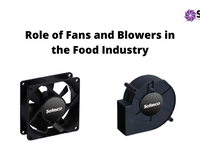
High airflow fans of the axial type move large volumes of air parallel to the fan shaft, delivering high CFM at low static pressure. This makes them the most widely used welding machine fan type for general enclosure ventilation: drawing in cool ambient air, passing it across transformers, circuit boards, and power modules, and expelling it at the exhaust. Both AC and DC axial fans are available from Sofasco. Axial fans are the correct choice when the internal airflow path is relatively unobstructed and bulk air movement is the primary requirement.
Blower Fans - Directed Airflow for Spot Cooling
Blower fans, also called squirrel-cage or forward-curved blowers draw air in axially and discharge it radially at higher static pressure than axial fans. This makes them the right choice when airflow must be directed precisely at a specific heat-generating component such as a heat sink, power FET, or IGBT module or when air must pass through resistance (filter media, narrow channels, or ducted paths). Sofasco offers both AC blowers (115V/230V) and DC blowers (12V/24V/48V), including IP54/IP55 rated variants for contaminated environments.
Centrifugal Fans - High Static Pressure for Complex Enclosure Layouts
Centrifugal fans use centrifugal force to generate the highest static pressure among the fan types used in welding equipment. They discharge air perpendicular to the intake (at 90°), enabling targeted delivery into confined spaces, around component obstacles, or through ducted internal paths where axial or blower fans would stall. Both forward-curved and backward-curved impeller types are available forward-curved for higher airflow volume; backward-curved for greater efficiency at higher static pressures. Sofasco's DC centrifugal fans and AC centrifugal fans cover both configurations for OEM integration into industrial welding equipment.
Optimising Airflow for Welding Machine Cooling
Efficient airflow design is as important as fan selection. Even the correct fan type will underperform if the internal airflow path is poorly designed. Key principles include:
Air Intake and Exhaust Balance
A balanced fan system draws cool ambient air in while expelling hot air out, maintaining the machine within its safe operating temperature range. Imbalanced intake and exhaust where more air is pushed in than exhausted, or vice versa, creates recirculation of hot air inside the enclosure, causing progressive thermal buildup that worsens with duty cycle.
Internal Airflow Path
Air must be routed strategically across transformers, circuit boards, and power modules to ensure uniform cooling and eliminate localised hot spots. An unobstructed, logical internal path from intake to exhaust is an essential components should not inadvertently block airflow from reaching downstream heat sources.
Cooling Heat Sinks and Power Electronics
Fans must direct airflow specifically toward heat sinks and sensitive electronics, particularly IGBT modules and rectifiers, which are most vulnerable to thermal degradation. Focused, high airflow on these areas prevents thermal shutdown and extends component service life.
Ventilation System Layout
Fan and vent placement determines whether airflow reaches all critical components. An optimised layout minimises flow resistance, reduces noise, and avoids dead zones where heat accumulates. Monitoring fan speed and airflow periodically helps detect early cooling failures before they cause internal damage.
Key Factors When Selecting a Fan for Welding Machine Cooling
Airflow Capacity - Matching High Airflow Fans to Heat Load
Airflow capacity (CFM) is the most critical selection factor. The high airflow fans required for high-power, high-duty-cycle welding machines must deliver enough cubic feet per minute to match the actual thermal load not just the enclosure volume. A fan with adequate airflow keeps components within their rated temperature range and prevents performance degradation under continuous operation. Always calculate the required CFM based on heat dissipation requirements, not approximate fan size.
Fan Size and Mounting Space
Welding enclosures have defined mounting points and limited internal clearance. The selected fan must fit the available mounting footprint precisely both frame size and mounting hole pattern must match. A fan that is too large for its mounting position will obstruct adjacent airflow paths; a fan too small for the heat load will allow overheating regardless of its efficiency rating.
Voltage Compatibility - AC or DC
AC fans (115V/230V) are the correct choice for stationary, mains-powered welding equipment. DC fans (12V/24V/48V) match the internal power supply of inverter welders and portable equipment. Beyond voltage level, the connector type, wire configuration, and control signal (on/off or PWM speed control) must all be confirmed against the machine's electrical design before specifying a fan for welding machine integration.
Bearing Type and Reliability
Bearing type is a direct determinant of service life. Ball bearing fans offer longer rated lifespan (up to 60,000 hours) and superior performance in high-temperature, high-vibration welding environments compared to sleeve bearing fans. Additional features to specify for welding environments include: PWM speed control (fan runs only as fast as the thermal load requires, reducing noise and bearing wear), locked rotor protection (prevents motor burnout if the fan stalls), and IP54/IP55 ingress protection where metal dust and spatter are present.
Noise and Performance Balance
Industrial welding environments impose significant ambient noise, but fan noise still affects operator comfort over long shifts. Selecting a fan sized for moderate RPM at the required CFM rather than a small, high-speed unit typically achieves the required cooling at lower noise. Secure mechanical mounting to the enclosure prevents vibration-transmitted noise from amplifying through the chassis.
Applications of Cooling Fans in Welding Machines
Welding machine fans are used across the full range of welding equipment types:
- Automated welding systems and robotic welding cells - continuous high-duty-cycle operation demands reliable, long-life high airflow fans with locked rotor protection
- Portable inverter welding equipment - compact DC fans (12V/24V) in dustproof configurations for field use
- Electronics and power module cooling - blower fans for targeted airflow at heat sinks and IGBT modules
- Inverter welding machines (IGBT-based) - DC axial or blower fans matched to 12V/24V/48V internal supplies
- Transformer-based welding machines - AC axial fans (115V/230V) for bulk enclosure ventilation
Best Practices for Cooling Welding Equipment
The following best practices will help keep your welding machine running efficiently and prevent overheating:
- Clean the welder fan regularly; metal dust and debris are the primary cause of blocked airflow and premature bearing failure in workshop environments.
- Inspect intake and exhaust vents for blockages after any physical movement of the machine displaced components or accumulated debris can redirect airflow away from critical areas.
- Specify dustproof fans (IP54/IP55) for high-particulate environments standard open fans are not designed for the metal dust levels generated in active welding shops.
- Install temperature sensors to monitor internal heat in real time, early detection of cooling degradation prevents thermal shutdown and component failure.
- Check for abnormal vibration and noise periodically, both are early indicators of bearing wear, blade damage, or loose mounting hardware.
- Position fans to direct airflow toward the highest heat-generating components transformers, IGBT modules, and heat sinks not simply toward the nearest exhaust vent.
Conclusion
Reliable thermal management is what separates welding equipment that performs consistently from equipment that degrades, shuts down, or fails prematurely. The right welding machine cooling fan, correctly typed, sized, voltage-matched, and positioned prevents overheating, maintains stable arc performance, and reduces unplanned downtime across the full duty cycle of the machine.
Sofasco™ International has manufactured certified AC and DC high airflow fans since 1981. Our range covers AC axial fans (115V/230V, 25–254mm), DC axial fans (12V/24V/48V), AC and DC blowers, and centrifugal fans all UL, CE, and RoHS certified, with dustproof IP54/IP55 variants available. Whether you are designing a fan for welding machine OEM integration or replacing a failed welder fan in an existing unit, Sofasco's engineering team provides application consultation and responds to custom enquiries within 24-48 hours. Use our product selector guide to identify the right specification for your application.
FAQs
Q1. How does the size of a fan for welding machine applications impact cooling performance?
Larger fans move more air at lower RPM, providing better cooling for high-power components with less noise and bearing wear. Smaller fans must run at higher speeds to compensate, generating more noise and wearing out faster. The correct approach is to match fan size to the available mounting space and required CFM output never simply fit the largest fan that physically clears the enclosure walls.
Q2. What is the role of fan bearings in welding machine cooling systems?
Bearings determine how long a fan operates reliably under continuous industrial duty and elevated temperatures. Ball bearings offer a rated service life of up to 60,000 hours at 60°C and perform better in high-vibration, high-temperature welding environments than sleeve bearings (rated approximately 20,000 hours at 45°C). For industrial welding applications with continuous or high-duty-cycle operation, ball bearing fans are the correct specification.
Q3. How does voltage compatibility affect cooling fan performance in welding equipment?
A fan operating below its rated voltage delivers less airflow than required, leaving critical components under protected. A fan operating above its rated voltage runs faster than designed, increasing noise, heat generation, and bearing wear. For inverter welders and portable equipment, specify DC fans in 12V, 24V, or 48V to match the internal power supply. For mains-powered stationary welders, specify AC fans at 115V or 230V. Always confirm connector type and control signal compatibility before specifying.
Q4. What is the impact of static pressure in centrifugal fans for welding machines?
Centrifugal fans generate higher static pressure than axial fans, enabling airflow to be pushed through ducted internal paths, around component obstacles, or through filter media all common in complex welding enclosure designs. In applications where the internal resistance is high enough to stall an axial fan, a centrifugal fan maintains the required airflow volume. Both forward-curved and backward-curved impeller types are available; backward-curved designs are more energy efficient at higher static pressures.
Q5. How is welder fan noise managed in industrial welding machines?
Fan noise is reduced by: selecting a fan sized for moderate RPM at the required CFM rather than a small, high-speed unit; choosing ball bearing construction over sleeve bearings; using PWM speed control so the fan only runs at maximum speed when the thermal load requires it; and ensuring the fan is securely mounted to the enclosure to prevent vibration transmission. In most industrial welding environments, a well-selected DC brushless fan with PWM control provides the best balance of cooling performance and noise management.