
When sourcing fans for industrial, commercial, or electronics cooling applications, one of the most consequential decisions you'll face is blade material. Plastic fan blades and metal fan blades each carry distinct engineering trade-offs, and choosing the wrong one can mean higher energy bills, premature motor failure, or unsafe operation in extreme environments.
For engineers, OEM designers, and procurement professionals selecting industrial cooling fans, the decision starts with two questions: What type of fan blade do you need? And then: Should it be metal or plastic? Plastic fan blades excel in corrosion-prone, vibration-sensitive, and lightweight applications. Metal blades dominate where high static pressure, extreme temperatures, or large blade diameters are required. Most industrial systems today use a mix of both. The right choice depends on your specific operating environment.
Understanding Types of Fan Blades First
Before comparing materials, it's important to understand that the types of fan blades vary by design and function. The three primary categories found in industrial and HVAC systems are:
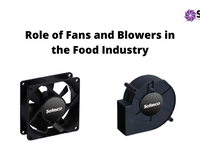
Axial fan blades: Propeller-shaped blades mounted on a rotating shaft. Axial fan blades are the most common in electronics cooling, HVAC condensers, and cooling towers. They move large air volumes at low static pressure. Sofasco supplies AC, DC, and EC axial fans ranging from 25 mm to 254 mm.
Centrifugal fan blades: Also called radial blades, centrifugal fan blades generate significantly higher static pressure than axial designs. Used in air-handling units, industrial blowers, and ducted HVAC systems. Sofasco's centrifugal range includes AC, DC, EC, and backward-curved centrifugal configurations.
Backward-inclined blades: Curved blades that handle variable pressures and high airflow simultaneously. Common in energy-recovery ventilation and process cooling. Both blade geometry and material must align with the static pressure demands of the application.
Each of these fan blade types can be manufactured in either plastic or metal, and each pairing produces very different performance outcomes.
Plastic Fan Blades: Properties, Strengths, and Limitations
Modern plastic fan blades are engineered from polypropylene, ABS, or composite polymer resins - not the brittle plastics of decades past. The colour and UV stabilizers are impregnated throughout the material, ensuring they won't chip, peel, or fade under prolonged operation.
Where Plastic Fan Blades Excel
- Corrosion resistance - Plastic is inherently immune to rust and highly resistant to most chemicals, making it the preferred choice in food processing, pharmaceutical, chemical manufacturing, and coastal HVAC environments.
- Quieter operation - Polymer materials naturally absorb vibration. This translates to lower noise levels - critical in medical equipment, telecom infrastructure, and office HVAC.
- Lower rotating mass - Lighter blades reduce stress on motor bearings, directly extending motor service life. In 24/7 industrial applications, this can add thousands of hours to bearing MTBF.
- Cost-effective for light-to-medium duty - Lower upfront material and manufacturing costs make plastic blades the economical choice for electronics cooling, data centers, and residential HVAC.
- Design flexibility - Plastic can be molded into complex aerodynamic profiles that are difficult or cost-prohibitive to manufacture in metal, enabling optimized airflow characteristics for specific CFM targets.
Limitations of Plastic Fan Blades
- Temperature sensitivity - Most standard polymer blends begin to deform above 80–100°C. High-heat industrial environments, exhaust systems near combustion sources, or outdoor exposure in desert climates demand metal alternatives.
- Size constraints - Maintaining structural rigidity at large diameters requires extensive additive reinforcement. In practice, plastic blades above 18" become increasingly difficult to balance accurately.
- Lower static pressure ceiling - Plastic blades are not engineered for high-pressure differential applications. Centrifugal fan systems demanding significant duct resistance should typically use metal blades.
Best For: Electronics cooling, HVAC OEM, telecom cabinets, data centers, food processing, medical devices, and any environment with humidity, moisture, or chemical exposure.
Metal Fan Blades: Properties, Strengths, and Limitations
Metal blade fans, typically fabricated from aluminium, steel, or galvalume-coated alloys, remain the gold standard for demanding industrial applications. Aluminium is preferred for its favourable strength-to-weight ratio, steel for extreme static pressure or impact resistance requirements.
Where Metal Fan Blades Excel
- Extreme temperature performance - Metal maintains structural integrity across a far wider temperature band than plastic. Steel and aluminium blades are routinely used in proximity to furnaces, turbines, and outdoor industrial condensers subject to harsh seasonal swings.
- High static pressure capability - Large-diameter metal axial and centrifugal fans can generate the static pressures needed to push air through complex ductwork, dense heat exchangers, or high-resistance filtration systems.
- Large blade diameter range - Metal fan propellers are manufactured from 2" up to 48" and beyond, enabling industrial-scale airflow that polymer blades simply cannot match structurally.
- Durability in heavy-duty cycles - For continuous 24/7 industrial operation where downtime is unacceptable - oil and gas, aerospace, power generation, metal blades provide a service life that justifies the higher upfront investment.
- Recyclability - Aluminium and steel blades can be fully recycled at the end of life, supporting sustainability goals in environmentally regulated industries.
Limitations of Metal Fan Blades
- Corrosion susceptibility - Uncoated steel will rust in high-humidity or saline environments. Galvalume and powder-coat finishes mitigate this but add cost and require periodic inspection for chipping.
- Higher noise output - Metal vibration at speed generates more acoustic energy. In noise-sensitive installations, metal blade fans require additional acoustic treatment or mounts.
- Greater motor/bearing load - Higher rotating mass translates to more bearing load and slightly higher inertia at startup. Motor sizing must account for this.
- Higher initial cost - Material and precision balancing requirements for metal blades increase unit cost versus comparable plastic blade assemblies.
Best For: Oil and gas, aerospace and defence, heavy industrial HVAC, outdoor condensers, high-heat machinery cooling, large air-handling units, and any application demanding blade diameters above 18".
Plastic Fan Blades vs Metal Fan Blades: The Industrial Buyer's Comparison
| Factor | Plastic Fan Blades | Metal Fan Blades |
|---|---|---|
| Material | Polypropylene, ABS, composite polymers | Aluminium, steel, galvalume-coated alloys |
| Weight | Lightweight - easier on bearings | Heavier - requires robust mounting |
| Static Pressure | Low to moderate applications | Moderate to high-pressure systems |
| Corrosion Resistance | Excellent - ideal for humid/chemical environments | Requires coating; susceptible to rust without treatment |
| Temperature Range | Limited - may warp under extreme heat | Excellent - handles extreme hot and cold |
| Noise Level | Quieter - absorbs vibration naturally | Louder - metal-on-metal vibration |
| Motor/Bearing Lifespan | Extends motor life due to lower mass | Heavier load: more stress on bearings |
| Blade Size Range | 2.5" to ~18" typical | 2" to 48" and larger |
| Upfront Cost | Lower | Higher |
| Long-term Value | Good for light-to-medium duty | Superior for heavy-duty, 24/7 industrial use |
| Best Applications | Electronics cooling, HVAC, food processing, medical, telecom | Industrial HVAC, oil & gas, aerospace, high-heat machinery |
How to Choose the Right Fan Blade Material
Select blade material based on environment, airflow needs, temperature, and lifecycle cost.
- Environment: Use plastic for humid, corrosive, or chemical-exposed settings. It resists rust and reduces maintenance.
- Airflow & Pressure: Plastic suits low-pressure, high-airflow applications (electronics, telecom). Metal is ideal for high-pressure, ducted, or large systems.
- Temperature: Above 80°C or near heat sources, choose metal. Plastic may deform under high heat.
- Cost & Lifespan: Plastic is cost-effective and reduces motor wear. Metal costs more upfront but lasts longer in heavy-duty, continuous use.
Choosing the Right Fan Blade for Your Industry
Understanding blade types and materials is half the equation. Translating that knowledge into a correct specification requires mapping it to your specific industry and operating environment. Here is how Sofasco's product line aligns with the most common industrial cooling applications:
| Industry | Recommended Blade Type | Preferred Material |
|---|---|---|
| Telecom & IT | Axial fan blades / DC axial fans | Plastic (polypropylene) |
| Medical & Lab | Forward curved impeller blades | Plastic (ABS/PP) |
| HVAC OEM | Backward curved centrifugal blades | Metal (aluminium) or plastic |
| Aerospace & Military | Axial or centrifugal blades | Metal (aluminium/stainless) |
| Chemical & Food Processing | Radial blade fans | Metal (coated) or PP plastic |
| Energy & Renewables | EC axial fan blades | Metal or weather-rated plastic |
| Data Centers | Backward curved centrifugal | Metal (aluminium) |
| Oil & Gas | Centrifugal/radial blades | Metal (ATEX-rated alloys) |
Conclusion
Selecting the wrong blade material can lead to performance loss, increased maintenance, and premature system failure. With over 30 years of engineering expertise, Sofasco helps you specify the right fan the first time, ensuring reliability, efficiency, and long-term performance.
FAQS
1. Which fan blade is better, plastic or metal?
Neither is universally better. Metal blade fans are ideal for high temperature and high-pressure applications, while plastic fan blades are better for corrosion resistance, low noise, and energy efficiency in controlled environments.
2. What is the best material for fan blades?
The best material depends on the application. Aluminium or steel is best for heavy-duty, high-temperature systems, while plastic (polypropylene/ABS) is ideal for corrosion-prone, low-noise, and energy-efficient applications.
3. Are metal fan blades more efficient than plastic fan blades?
Metal fan blades are more efficient in high static pressure and extreme conditions, while plastic fan blades are more energy-efficient in low to medium load systems due to reduced motor strain.
4. When should I choose backward curved fan blades over forward curved fan blades?
Choose backward curved fan blades for higher efficiency, stable performance, and variable load systems. Use forward curved fan blades when you need high airflow at low speed with quieter operation.
5. What is the difference between axial fan blades and centrifugal fan blades?
Axial fan blades move air parallel to the shaft and are best for high airflow and low pressure. Centrifugal fan blades move air radially and are designed for high-pressure, ducted, or restricted airflow systems.